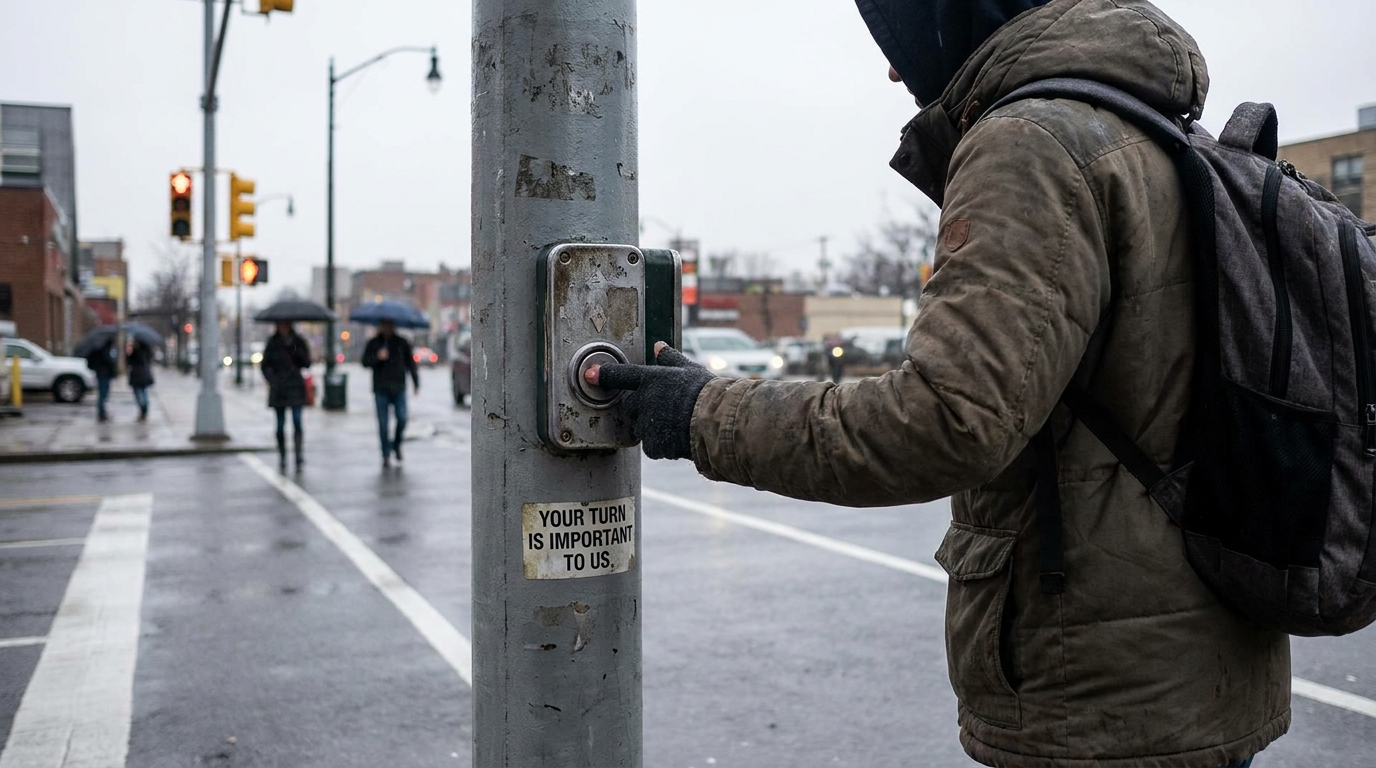
PORTLAND - The Bureau of Transportation replaced twelve downtown crosswalk buttons with placebo units that click satisfyingly but do not affect signal timing, a pilot program officials said improved pedestrian compliance by 18%. "People need to feel heard," said engineer Lila Gant. "They don't need to actually be heard by the traffic algorithm."
Signs now explain that the buttons provide "emotional right-of-way" while lights continue on their scheduled compassionless cycle. Focus groups rated the experience as "fine, I guess" and "better than yelling at SUVs." Behavioral scientists note similar placebo infrastructure elsewhere: office thermostats, elevator close doors, and congressional ethics committees. Gant said crosswalk buttons were the lowest-hanging fruit of benign deception.
Advocates for disability access raised concerns until learning that audible signals remain functional and tied to real controllers. Only the plastic finger toy part is fake. The city's tourism board marketed the buttons as interactive art. Instagram posts tagged #IWaitedAnyway increased foot traffic to cafes near intersections, which merchants called a win. "People are more likely to linger for coffee if they think their presence matters," said café owner Sarah Thompson.
If successful, the city will expand placebo infrastructure to include a community suggestion box that shreds input and plays a soft chime. Critics demanded real control. Gant offered them a button. "Just press it, and you'll see how it works," she said with a straight face.
Local color abounded as residents adapted to their new reality. One anonymous passerby quipped, "I guess I'm just going to have to pretend I'm not in a rush." A group of tourists posed for photos with the buttons, unaware that pressing them had no effect on traffic lights. One tourist, Jane Doe, said, "It's like a modern-day magic trick! It’s so much more fun than waiting in line at the museum."
The city council approved an additional $100,000 to expand the placebo program to include pedestrian countdown timers that display random numbers and street signs that read "Speed Limit: 35" even when cars fly by at 60 miles per hour. "We're not just pretending; we're making a statement," said Mayor Eliza Hartman. "Portland is all about creating an environment where people feel seen, heard, and maybe just a little bit loved."
As the program rolled out, city planners pondered further innovations: fake recycling bins that emit pleasant scents but don't actually recycle anything, and park benches that play soft music but offer no seating. "We're not in Kansas anymore," said Gant with a wry smile. "Here, we make our own reality."
In the end, the city's placebo buttons became a symbol of its unique brand of urban innovation. Pedestrians learned to wait patiently for their emotional right-of-way, and local businesses thrived on the increased foot traffic. As one resident put it, "Portland is all about making you feel like your presence matters - whether or not it actually does."