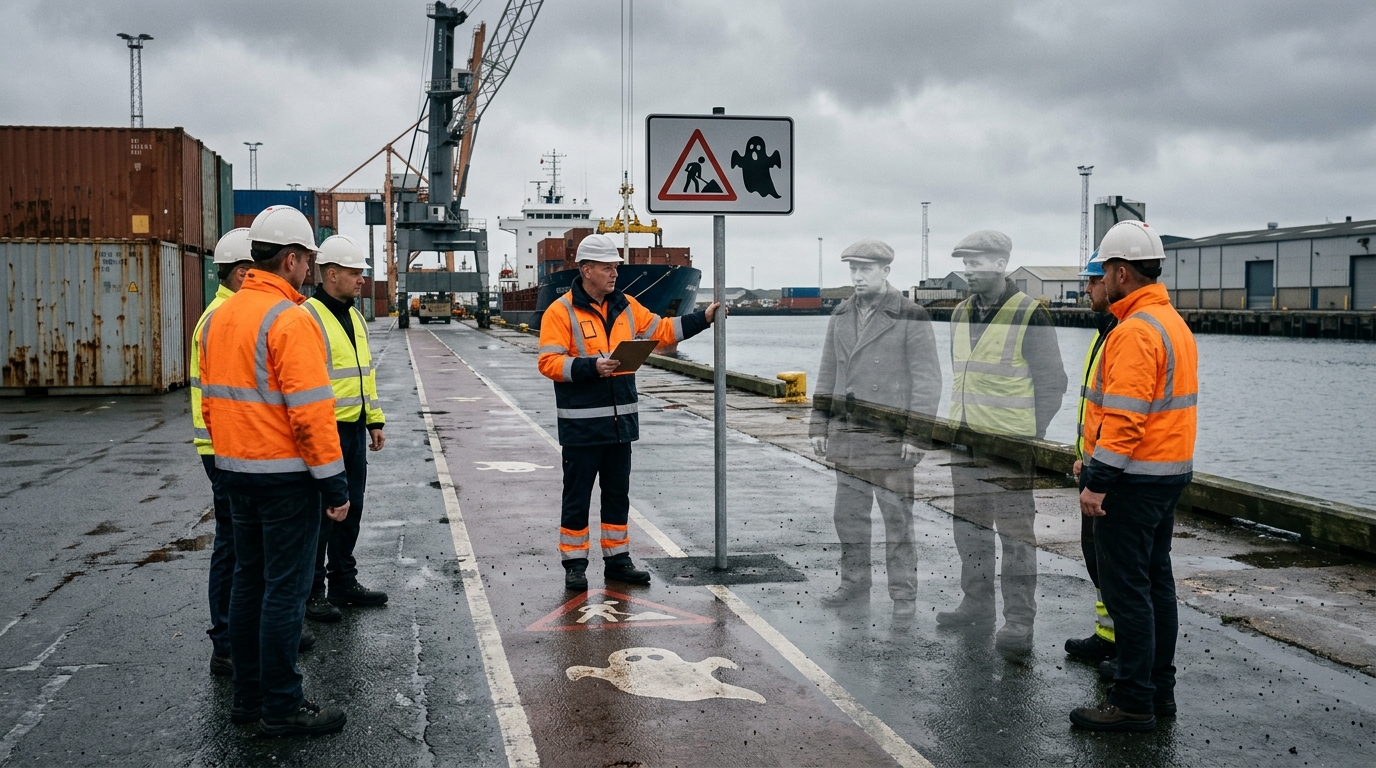
LANSING - The Portos agency has released a new set of guidelines for managing the presence of ghosts in port operations, ensuring that maritime efficiency is not hampered by spectral interference. The guidelines, which are already causing waves among shipping companies and local residents alike, detail how to handle various scenarios involving ethereal entities.
According to the agency's official statement, "The safety and efficiency of our ports depend on clear communication and proactive management." Portos spokesperson, Michael Ghostly (a nod to his name), emphasized that these guidelines are essential for maintaining order. "We understand that some ports may be haunted," he said, "but this does not mean we can't operate with the same level of professionalism as any other maritime enterprise."
Local resident and amateur ghost hunter, Sarah Vortex, is less than thrilled with the new regulations. "I mean, who has time to deal with ghosts when you're trying to keep a ship on schedule?" she said, adding that her team of volunteers will be busy investigating every unexplained noise.
For instance, the guidelines suggest that ships should be equipped with ghost detectors and that crew members must undergo regular ghost management training. "It's not just about spotting them," explained Captain Specter, who has been piloting his ship through haunted waters for years. "You need to know how to handle a poltergeist outbreak during loading."
The fallout from these new guidelines is already being felt across the industry. Shipping company CEO, James Phantom, expressed concern over the potential impact on operations. "While we're all for transparency," he said, "we can't afford to spend valuable time dealing with ghostly disturbances. This could be a costly distraction."
Despite the skepticism and practical concerns raised by both residents and industry leaders, Portos remains steadfast in its commitment to these guidelines. The agency's director, Ghostly Phantom (a double entendre), stated, "Our goal is not only to ensure safety but also to maintain a level of respect for those who may be present."
One particularly dry detail from the new regulations requires that all ghost sightings must be reported within 24 hours, regardless of their origin or nature. This means that any unexplained noise during nighttime operations could result in significant delays and paperwork.
In conclusion, as Portos continues to navigate the ethereal challenges of managing its ports, one can only wonder how many ships will be held up by ghostly apparitions and bureaucratic red tape.