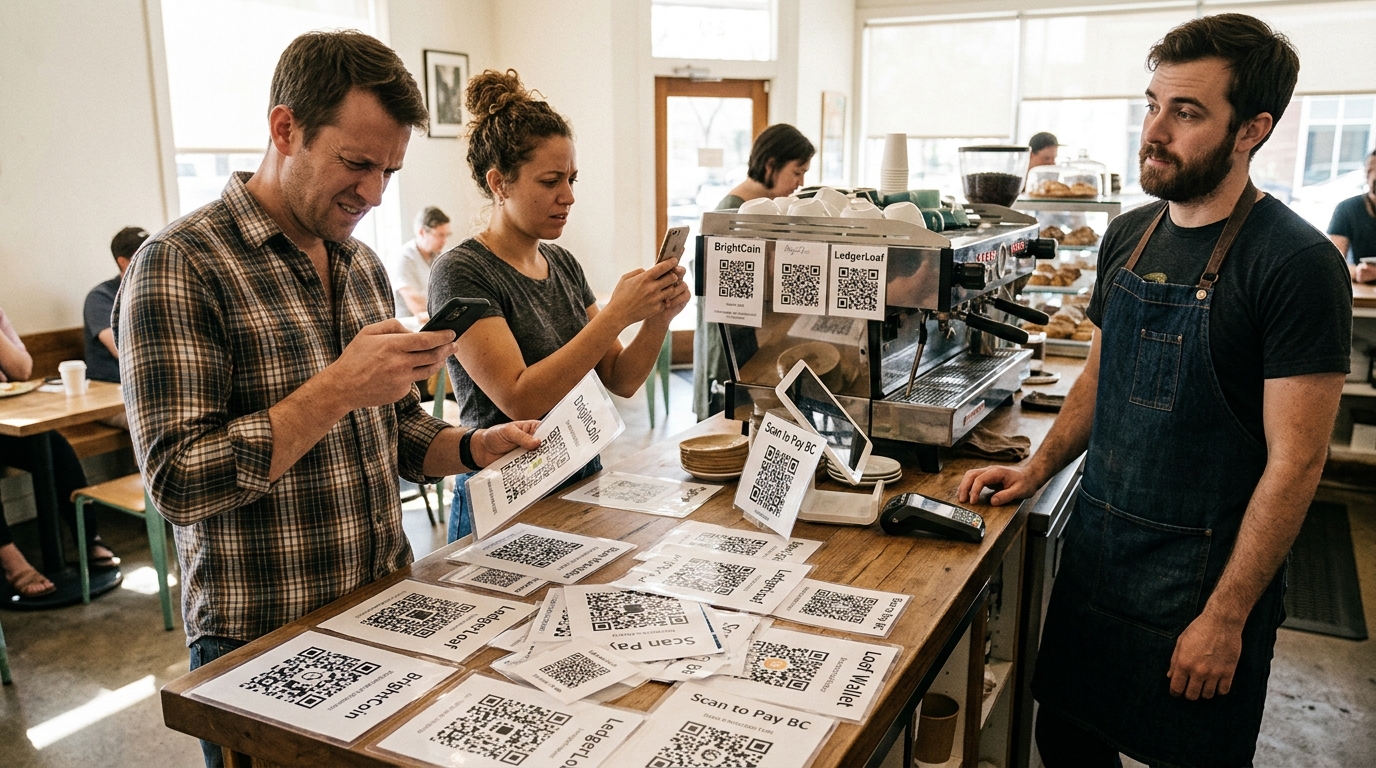
AUSTIN - Digital currencies have overtaken cash in more than half of downtown wallets, according to a chamber of commerce survey that also found three people still carrying Blockbuster gift cards "just in case." Merchants from coffee carts to hardware stores now accept tokens with names like BrightCoin, LedgerLoaf, and a stablecoin pegged allegedly to "vibes." Payment terminals chirp happily while accountants weep softly in back offices.
Merchants reported that the transition has been surprisingly seamless. At the local café, barista Sarah Johnson said, "People just scan their phones, and it’s done. No more counting change or worrying about who left what behind." However, she noted a few hiccups: "Sometimes they forget to charge up their wallets, and then we end up with a lot of confused looks."
Financial planner Rosa Duarte praised the faster checkout process and fewer germy bills. "Money evolves," Duarte said, her voice tinged with the calmness of someone who has seen trends come and go. "First shells, then paper, now QR codes that judge your haircut." She went on to explain how these tokens work: "You just scan a code, and it's like magic. It’s faster than swiping a card, and there’s no need for change."
Critics like retailer Mark Thompson remained unmoved. "Why carry bits when you can hold real money?" he asked, waving a dollar bill that may have been printed before Bluetooth. Thompson runs a small bookstore in the heart of downtown. He said, "I understand the convenience, but I still prefer cash. It’s tangible and doesn’t depend on an internet connection."
City regulators convened a task force to determine whether a token named after a dog qualifies as currency or fan mail. Legal counsel advised "both, depending on market mood." The task force met in a small conference room with a view of the city skyline. One member suggested, "We should consider the legal implications of tokens that might be seen as promotional material rather than money."
Economists warned volatility could affect tipping culture. Bartender Luis Ortega said patrons now tip in coins that "might be worth a mortgage or a sticker by closing." He added, "It's hard to know if you're getting a fair tip when the value of your token fluctuates like the weather." Ortega went on to explain how he deals with this issue: "I just keep a mental note and try to average it out over time."
Banks responded with hybrid accounts that convert paychecks automatically into whatever trended on social media during lunch. Uptake among Gen Z was immediate; uptake among notaries was not. At the local bank, a teller named Maria explained how these new accounts work: "It’s like having a checking account that's always up to date with the latest trends. You just set it and forget it."
The Federal Reserve declined comment, releasing instead a PDF titled "We Are Aware." The document was a dry compilation of statistics and graphs, all of which seemed to say the same thing: "Digital currencies are here to stay." A spokesperson for the Fed said, "While we monitor developments in this space, our primary focus remains on traditional monetary policy."
Duarte recommended diversifying: "Keep some cash, some coin, and at least one friend who still knows math." She went on to say that while digital currencies were convenient, they shouldn't completely replace physical money. "It’s good to have a backup plan," she said.
Officials said the trend shows no sign of reversing unless Wi-Fi does. They added, "We are aware of the challenges and are working to ensure a smooth transition for all." The city council even considered passing a resolution encouraging businesses to accept both digital and physical currencies. However, the resolution was met with mixed reactions; some businesses saw it as an unnecessary complication.
In the end, the world seems to be moving forward with this new form of currency, but not without its quirks and challenges. As one resident put it, "It’s like trying to keep up with a cat who keeps changing its mind about where it wants to sit."